Showing posts with label Microsoft. Show all posts

Thursday, November 20, 2014

Taking Health Gobal and Mobile


During the Mobile Edge event held at Microsoft in Lisbon I spoke about innovations and mobile health. Being the last speaker for the event, as usual attendees were tired, eager to get to the cocktails or go home… so to make it interesting I shortened my presentation. Having said that there some valuable insights.

If we look at today’s world… Almost every person on the planet has some form of a mobile device. We demand immediate information, anywhere.. Including those related to health. So if we feel strange or feel ill we look to the web or the net for answers, immediate diagnosis in that case, and in most cases we get wrong information.
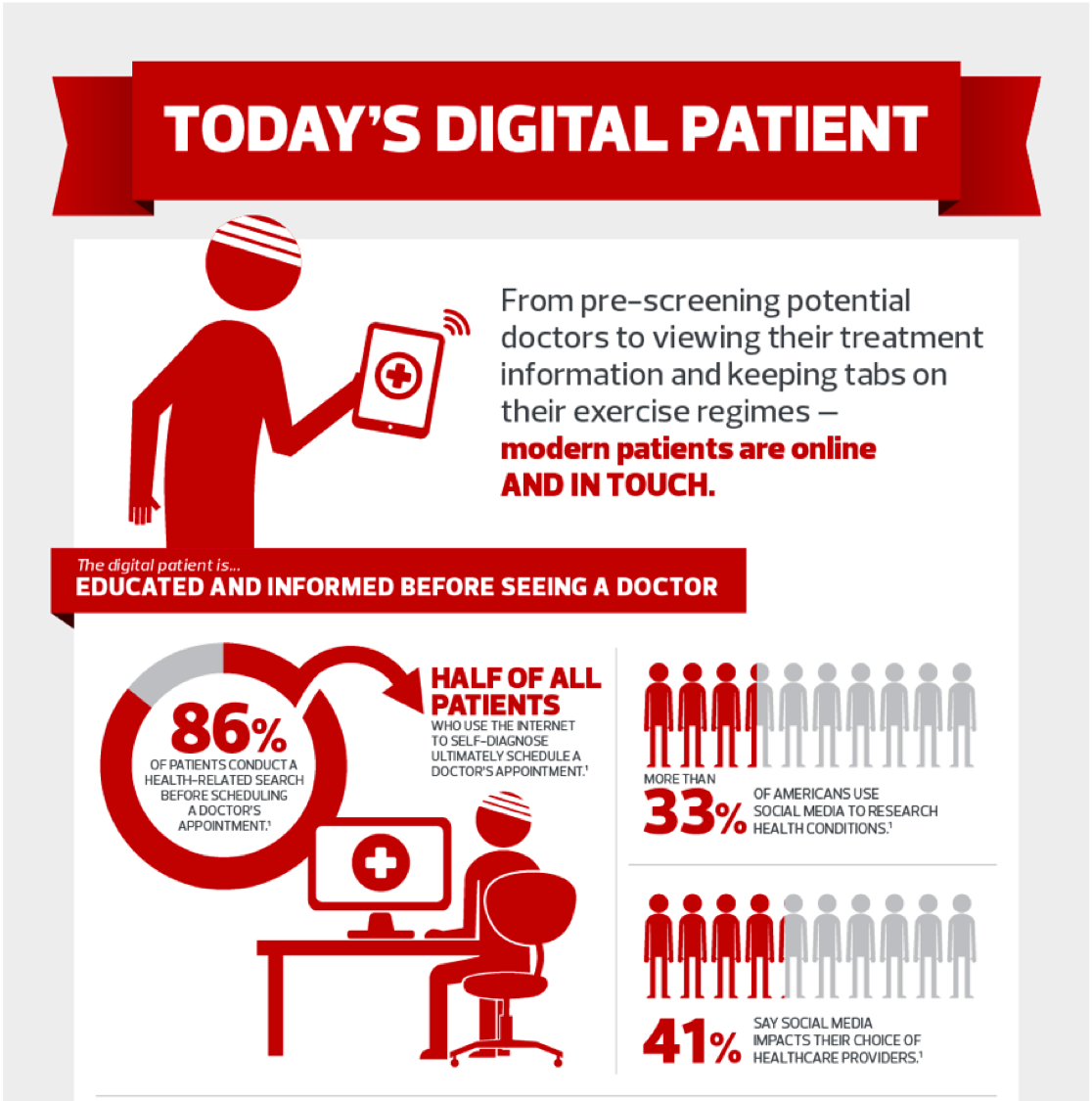


After visiting a medical practitioner,  Doctors would like to stay in touch to make sure our health issues are being addressed and most medical practitioners want to ensure that medications given are taken properly and are effectively.


In fact today there are more than 100,000 mhealth related applications available on public application stores and in the US alone there were 247 million people who have downloaded  an  mhealth app in 2013 alone.


However most mHealth app today are based on wearable and fitness devices


Mobile Health  is a very fast growing economy on its own and projected to be around 58B US$ by 2020 for applications alone. A small piece of the health industry which is projected to be around 6T US$ at that same time.


mHealth is such a hot topics these days that even Google and Apple have joined in...


Considering that wearables alone will be worth around 12B US$ by 2018


However in the future it will no longer be wearables that will drive mHealth, it will be the need for actual medical care.


And this is due to huge savings on the way medical care is provided to a growing population, a population that is demands real time and increasingly mobile.


Hence some countries already have taken advantage of this opportunity. Take the Medicon Valley as an example, it is being geared to the the next version of Silicon Valley in the medical field. The Öresunds region which encompasses Southern Sweden and Denmark will soon no longer be called Öresund even by locals...


but will be known as Medicon Valley.


In this region, today, you will find the largest concentration of life science companies and organizations... Most if not all are already having their own mHealth app...

  • 80 biotech companies
  • 20 pharma companies
  • 100 medtech companies
  • 7 science parks with a significant focus on life science
  • 6 incubators, of which 3 have a significant focus on life science
  • 80 contract research organizations and contract manufacturing organizations
  • 40,000 employees in the private life science sector
  • 12 universities, 5 of which supply life science related educations                 
  • 32 hospitals, of which 11 are university hospitals


So the question is do you want to join this massive wave and revolutionize health by  making it truly mobile…  and global? How do we help those who need medical care but can not afford it?

Wednesday, September 4, 2013

Stealing Nokia

Microsoft acquired Nokia very recently.. and it is a steal with Microsoft paying less for Nokia than what it pays for Skype. Does this mean that Microsoft is about to kill the Nokia brand and position itself to better compete with Apple?

Although one thing Microsoft can learn from Google and Apple is that  that having a lot of money is not enough to succeed in the mobile OS wars. Another thing it can learn from Blackberry is that the enterprise mobile segment is dead.

If Nokia was purchased by Microsoft for 7.5B$, what value can be made of out Blackberry? 1$ for Blackberry, anyone?

Friday, July 13, 2012

Who will win the Mobile OS wars?


With the global smartphone penetration expected to increase 3 billion smartphones in 5 years, or half of the world's pollution the positioning of various OS platforms are becoming more and more important. Now considering the various devices powered by smartphone OS then that market far exceeds half of the world's population. With such a very big and lucrative market OS and platform developers continue to fight for market share, iOS and Android is now very powerful, however some platforms have fallen or falling. The most glaring example is BREW and Symbian. Although there are four times more devices shipped by Symbian compared to Windows phone devices in 2012 they do now have the ecosystem to generate the kind of fire works that iOS and Android are currently enjoying. 60% of BREW developers indicates they will stop using it since its at the end of its life cycle and Qualcomm is quietly preparing for its discontinuation. Symbian has the highest rate of developer abandonment amongst all platform at 52%, especially that Nokia have declared that Microsoft is its preferred smartphone platform.


Vision Mobile mapped the performance of various OS below.


Blackberry is never far behind BREW and Symbian and is very close to becoming an endangered if not extinct platform. RIM has significant difficulties competing with iOS and Android even considering the expected release of the BB10 platform this year especially with email and instant messaging commonly available across  all platforms, Blackberry has lost its edge. As a result RIM investors are pressing the company to break up and sell all its assets. 14% of BlackBerry developers are abandoning the platform, even though the platform still brings considerable revenue to developers, the main reason being the very weak sales and market position of BlackBerry devices.

Samsung's Bada is next in line in the list of platforms being abandoned, with 49% of developers planning to drop it, it will end up to be an pure South Korean platform that is immature, substantially buggy and only limited to low-end smart phones. Samsung is losing its bargaining power towards Google's android which is now also penetrating the low cost smart phone market.

Windows Phone, the new kid on the block is the new cool: Even though  Windows Phone sales continue to disappoint, a year on, with 2.6 million devices sold in Q1 2012, according to Gartner, interest among developers continues to build up. The majority of developers who plan to adopt a new platform, plan to adopt Windows Phone (57%). Overall, 42% of developers using iOS and Android indicate that they plan to adopt Windows Phone and while the intention is slightly stronger among developers using mobile web (44%) or other, less popular platforms, intention doesn’t seem to vary significantly by the platform developers currently use.

Now there is a duopoly between Android and iOS, who will be the most dominant is still to be determined, although  Android is currently on a clear lead, there is a threat coming from HTML 5. Cross platform development is on the rise with 72% of iOS developers using Android and 64% of Android developers using iOS. The future of smart phones are pegged on this 2 giants. However for cross platform functionality HTML 5 is entering that space. This means that the choice between native applications and HTML 5 will be a cat and mouse game, where native applications will alway be in the forefront in terms of capabilities and feature set, HTML 5 will leverage in its cross platform functionalities. As Tom Hume, founder of FuturePlatform argues, “User expectations will always be formed by the native platforms, and native will always be a step ahead of HTML, as that’s in the interest of platform vendors”. He explains that “today, HTML5 performs poorly with new user interface paradigms like Microsoft’s Metro UI. Tomorrow, HTML5 will need to catch up with ambient sensing. It’s always going to be a cat and mouse game.”


The question is how will shape the ever growing smart phone market. So take your picks. As for AmanziTel being in the Customer Experience Management sphere, we support most of the platforms today and will continue to do so as long as there are consumers using this platforms. Although we have focused mostly on Android and iOS, while Windows Phone is of interest the platform is too closed for higher penetration amongst developers. How about you, will you pick one platform from the other?

Thursday, February 17, 2011

Product demo, should it be perfect?

Have you been in a situation where you are looking at a product demo and it failed? Does it sound very common?

Actually it does, majority of product demo in the technology sector fails. Just take in to account the demo that Microsoft did at the Mobile World Congress during Steve Ballmer's key note address. Have you seen that? If not here's a short summary...Steve introduced Windows Phone with awesome capabilities then Joe Balfiore showed the Windows Phone live on stage and then bang!... a few of his demo cases failed. Is that acceptable? Does this outline how bad Windows Phone is?

In my perspective if you demo a product make sure you are well prepared and make sure that your uses cases always work. Or am I alone in thinking as such?