Tuesday, August 18, 2015

Seeing the World and Sharing Experiences

For those who like to travel and those who travel a lot we share experiences through social media. Instagram and Facebook are very popular as a platform to share mementos and memories. We immortalize our experiences no longer for our own viewing pleasure but also for the world… Sharing is wonderful, however in all the trips we make planning and organizing takes the most time and something that followers and friends in social media might not have a grasp of how much time is spent on such activity. Perhaps there is a way to make the experience much better, make planning and organizing easier in a way that it is as easy as to share a picture, a video for everyone’s enjoyment.

What if we can save a few minutes each day or even a few hours each day in planning our vacations, our trips or even as simple as finding the best place to dine based on our own individual preferences? What if we can do that as easy as sharing our experiences in Social Media? Wouldn’t that make our travels more enjoyable?

Tuesday, July 28, 2015

Do We Want to Know When Service is Not Going to be Available?

For those of us that consumes services, any kind of services we all do not want interruptions to those services. Just imagine you are in an airport and suddenly the entire flight control system goes down without notice, this will create chaos and delays and for customers frustrations, stress and unhappiness. Just imagine you are one of those passengers stuck in the airport and have an emergency to attend to, how would you feel? Same is true for basic services like electricity and water, now adays we are so used to seamless services that interruptions becomes a very big deal and a sources of frustrations. Having said that there are still countries where service interruptions are normal and for them they have adapted to that way of life, became part of the culture so service interruptions are just an annoyance. For those of us who are used to good and seamless services will we accept such mentality to be imposed on us in terms of service interruptions? Will you hire a service provider with this kind of mentality or culture?

In today’s highly mobile and digital world, mobile data has become a basic service. It is embedded in our daily lives that we can no longer live without it. How do we feel if suddenly there is no communications service, we can’t browse the internet, we can’t watch streaming videos, we can’t communicate instantly? It will feel like we are back to the stone age, it will create chaos and a lot of frustration to many and in some cases affected customers will churn and switch a different service provider.

Now service interruptions are unavoidable since as  a service provider there is a need to schedule maintenance, to improve services to ensure continuity of services. Would it reduce stress and frustration if customers are notified correctly of such interruptions? Consider Telenor in Sweden, they notify customers by SMS for scheduled interruptions, surely this is a good thing since as a customer you know when you will not have any services available. However as customers we also do not want to receive service notifications that do not affect us since it becomes an annoyance. Just imagine you are in the Maldives enjoying your vacation, then suddenly you receive service notifications every hour, won’t you be annoyed?

There is of course an ideal way of notifying customers for service interruptions, that is only notify customers who are directly affected by such interruption at a specific time. This can be done by Geo-fencing, the challenge of course is how to effective implement Geo-fencing without sounding like big brother watching every customer.

Wednesday, July 15, 2015

Customer Service and Humanity

In the past two weeks I flew in out of 14 countries, 16 flights in total considering return flights to Sweden… During this two weeks I observed very different levels of service amongst the various airlines.


The best was with Turkish Airlines, friendly and helpful cabin crew. The worse was with Malaysian Airlines with very rude cabin crew especially the flight from Manila to Kuala Lumpur. The low point was when the crew started telling passengers (actually I was one of them) that the toilets are unavailable due to the Pilot declaring emergency situation. However there was no seat-belt signs turned on and no announcement from the Pilot. In the background the crew were chatting and laughing together every time they command a passenger who want to use the toilet to take a seat. Considering that Malaysia Airlines is in a dire financial situation I can clearly understand why, their service is amongst the worst in the world and to make fun of passengers is such a very low point.


If Malaysian airline can not improve their service they will definitely go out of business no matter how much money the government will put in to rescue the airline. I have criticized Turkish Airlines in the past but their service have improved dramatically over the years and is now one of the best airlines in the world. What made the difference is putting a touch of humanity to their service…


When we look at customer service, for example in Telecom, each mobile operator would like to lower the cost but at the same time still deliver a wonderful customer experience. This is being achieved by providing customer are in various channels. One channel in particular is the most effective, directly from a customer’s device… where customer service can be automated and enhance but still maintaining the the human touch. Operators like DiGi and Malaysia and Smartfren in Indonesia are starting to implement this improved customer experience programs and are perfecting their user interfaces to give the most complete automated and humane experience possible.


Friday, June 26, 2015

Improving Farming Efficiency Through Technology to Help Local Communities

I recently came in contact with 2 brilliant gentlemen from Ethiopia who wanted to modernize farming in Ethiopia. Having been involved in the farming business, although considered in the upper 1% of farming categories I fully  understand the challenges most farmers face especially in underdeveloped and developing world where traditional farming have not changed much in a thousand years. Their aim is to revolutionize farming to increase yield using modern methods and employing wireless sensors. The question is will this succeed in remote rural areas in third world countries?

Lets look at the problem. Most farmers:
  • Are poor, they hardly make enough of a living
  • Employ traditional farming methods developed thousand years ago
  • Uneducated and lacks knowledge of modern farming methods and techniques
  • Can not afford to use modern farming tools even if they wanted to
  • Are in debt and in the risk of losing their farms

For large farms employing machinery dramatically increase productivity since one person can tend a large area in the shortest possible time, hence timing planting and harvesting perfectly. For small scale farmers they would rely on cheap labor and their own hard work to tend the farm which affects productivity. For large farms investing in modern machinery makes a lot of sense. However with our aim to provide jobs we mostly employ a large number of people and a mix of manual labor and machine. Our aim is to employ enough people to alleviate poverty in the community. It is always better to teach someone how to fish instead of giving them a fish.

Determining soil composition, water purity, air quality helps in increasing yield from farmlands. This involved having the right measurement tools to determine which crops to plant at a particular season and what fertilizers to use. The only problem is small scale farmers are not able to afford buying such measurement tools. Perhaps a better solution is to establish a cooperating community of farmers who can share measurement tools and analytic to give everyone a good start.

Then there is constant monitoring to determine if crops required more water, better fertilizers. Having said that all monitoring tools are expensive so only large farms can afford to do so. How can monitoring solutions be shared for it to become cost effective enough for small scale farmers to afford?

At the end of the day farming is a business and businesses need to generate returns of investments. Our approach had been focus on changing the way farms are operated and better land use. For example we convert rice fields to fisheries since the returns are better, although the investment are higher. Utilizing sensors to monitor daily progress is good, however the data is useless without expert analysis and such knowledge is the primary driver to fully modernize farming, make it more efficient and improve returns.


Tuesday, May 5, 2015

Improving Lives One Message At A Time

All my life I have always strive for making the world a better place through technology, through philanthropy, through sustainable food production… When the world started calling with mobile phones I help improved quality of communications through automated planning. When the world of simple voice call changed to complex data communications I help improve quality of delivered services through secured on-device customer experience. Now in the world of Internet of things and converging media I am finding my calling. No longer as a trailblazer in introducing something new but by innovating on what is already available in front of us.

Being a trailblazer is never easy, in a lot of cases in world of technology the timing might be too early, there are of course early adopters but there are more skeptics. I started and sold/exited my companies, some I keep on growing and investing on specially the ones that directly help people to have better lives. Now I am at a crossroad, do I want to continue being a trailblazer or do I want to innovate? How can I make a better difference in the world, in the life of many? How can I be a better contributor to make this world a better place? How can I be of better service to more people?

Looking at today’s world where communications and information makes the world go round, I am inclined to at this moment to help make this world a better place in my own small way where everyone can communicate and have access to information for free whether they have internet connection or not. Internet.org have taken the the stand for free internet for  everyone, following that why don't we aim for free access to information and  communication? At the end of the day communication is free, nature never intended it to be a money making venture…. So why don't we follow the cues of nature and provide free communication and information to everyone….

Wednesday, April 22, 2015

The Future of Instant Messaging

In the past weeks several instant messaging applications such as WhatsApp, WeChat,  have started to offer voice calls, the trend of messaging applications offering voice calling capabilities is nothing new. Tango, Viber, Line all have offered voice calls before WhatsApp even thought of it. Is voice call the future of instant messaging? We as consumers use instant messaging applications for one simple reason, messages are delivered instantly, then comes the addons such as emoticons… With voice calling being introduced is it still right to call it an instant messaging application?


In a world where instant messaging are provided in various ways including messages that disappears, messages that are secure what do we as consumers actually like? We have seen very fast adoption of WhatsApp because it was a simple messenger, we have seen Line generates the highest revenue per user since it tickles our fancy. Having said that messaging applications are converging into the same set of offering . Will there still be a need for differentiators for one application to be the adopted globally?


What about going back to basics, messages that are delivered instantly even if you are not online? Now, how about adding the beauty of instant messaging by delivering those messages free? While we are at it why not do the same for voice calls? How about voice calls that are free even if you are not online? The question is going back to basics enough to be the dominant instant messaging application of the future?


Monday, April 20, 2015

How to gamify a boring customer service app?

Enabling mobile service providers to empower their customer services  in delivering the most effective customer care services in the world is the easy bit. The biggest challenge is how to make such service delivery adopted by users. One strategy is through the use of mobile applications. Most if not all mobile service providers today already have mobile applications and already deliver some form of customer service through mobile applications, now how can you add value in order for the application and service to be constantly used by mobile customers? In the world of mobile application other than delivering the right features gamification strategies are being employed to get users to use the application like they do with games, to be used a lot, make it engaging, make it satisfying, make it addictive.

So how do do that on boring mobile services?

One way that  is done in every industry but most importantly in retail and travel is loyalty program. So adding a component of a loyalty programs to customer service can in theory encourage users to use the service more. The truth is most if not all loyalty program are only used when it is needed, for example when shopping or traveling. So the next challenge is how to make a loyalty program engaging enough for users to use it at least 3 times a day…

Other than a loyalty program what can be implemented by a mobile service operators what can be done? Can it be any of this suggestions?
  • Personalization
  • Share location
  • Share results in social media
  • Add friends
  • Send messages to other app users
  • In app purchases
  • Send gifts
  • Chat
  • Wall Post
  • Transfer loyalty credits
  • Promotions
  • Recruit users
  • Game
  • Credits for using operator services

Tuesday, January 13, 2015

Avoiding accidents

During the Xmas weekend I was driving from Helsingborg to Germany in an SUV filled with luggage and 3 kids on board…. Having driven this roads hundreds of times I feel like I know it like the back of my hand… Having said that this weekend was the second time a car in front of me crashed violently while driving on a German highway (A1) where there are no speed limits (in most parts).

This is how it happened…. I was driving at 180 km/h when two cars passed me by (Golf R and BMW 5). When the BMW was about 3 seconds from me it blew a tire, spin in the middle of the highway twice and hit the barrier on the side of the road…I managed to avoid collision and saw that the occupants in the BMW that crashed into the barrier looked OK, and the other car driving with it had stopped and so are other cars. Having 3 kids on board I decided to drive on and report the incident. What amazes me is that my daughter pointed out that the car is doing strange 2 seconds before I saw it happened, did she saw it happened before it actually did? Was  I too slow to realized what’s happening?  The question is such an accident avoidable in the first place?

In cars we avoid accidents both by prevention and reaction. Prevention by ensuring cars are always in the best condition and working order, while driving defensively and carefully. Reaction by ensuring you are always alert, always know what’s happening around you and what’s happening to your car from how the tire feels when it is in contact with the tarmac to how the engine sounds when you press on the accelerator and from how the brake reacts when you press on the brake pedal… This we do everyday sometimes out habit, in a lot of cases due to several years of practice…

Now when it comes to mobile networks, are there really accidents? Sometimes the network goes down, is this an accident? In a professionally managed mobile networks, there are no accidents. Any network problem is caused by inefficiencies in planing and maintaining that network. Consider how a passenger in a car feels while going through an accident… now treat that similarly as as a mobile user when the service suddenly fails in  the middle of an important conversation or while using online communications…. Its traumatic….

As a service provider how can you avoid this accidents? How can you ensure your mobile subscribers are not having a traumatic experience?

Monday, November 24, 2014

Is tourism an answer to building sustainable communities?

I spend the weekend in London and the thought of how to improve lives in poor communities crossed my mind…  Currently we are heavily investing in higher yield farming methodologies to help families and communities, the model is working very well with the first farms sustainable, employing several families paid at a premium. Now while in London going from one place to another, the city is very busy especially tourist snapping pictures. It reminded me of Thailand and Malaysia where they have tours organized to see farms… Now the question that crossed my mind is can tourism generate additional  income to the farms or the community we have pledge to help?

Where the farms are located, although far from Manila, the beauty of nature is displayed at its best. Beautiful caves, amazing waterfalls, jungles and forest, pristine beaches, perfect waves…. Generating revenue to sustain communities of course will require investment to ensure a wonderful and unforgettable experience for guests who come to visit. The question is will there be enough revenue to justify the investments.. Unless the investment is the charitable donation….

Thursday, November 20, 2014

Taking Health Gobal and Mobile


During the Mobile Edge event held at Microsoft in Lisbon I spoke about innovations and mobile health. Being the last speaker for the event, as usual attendees were tired, eager to get to the cocktails or go home… so to make it interesting I shortened my presentation. Having said that there some valuable insights.

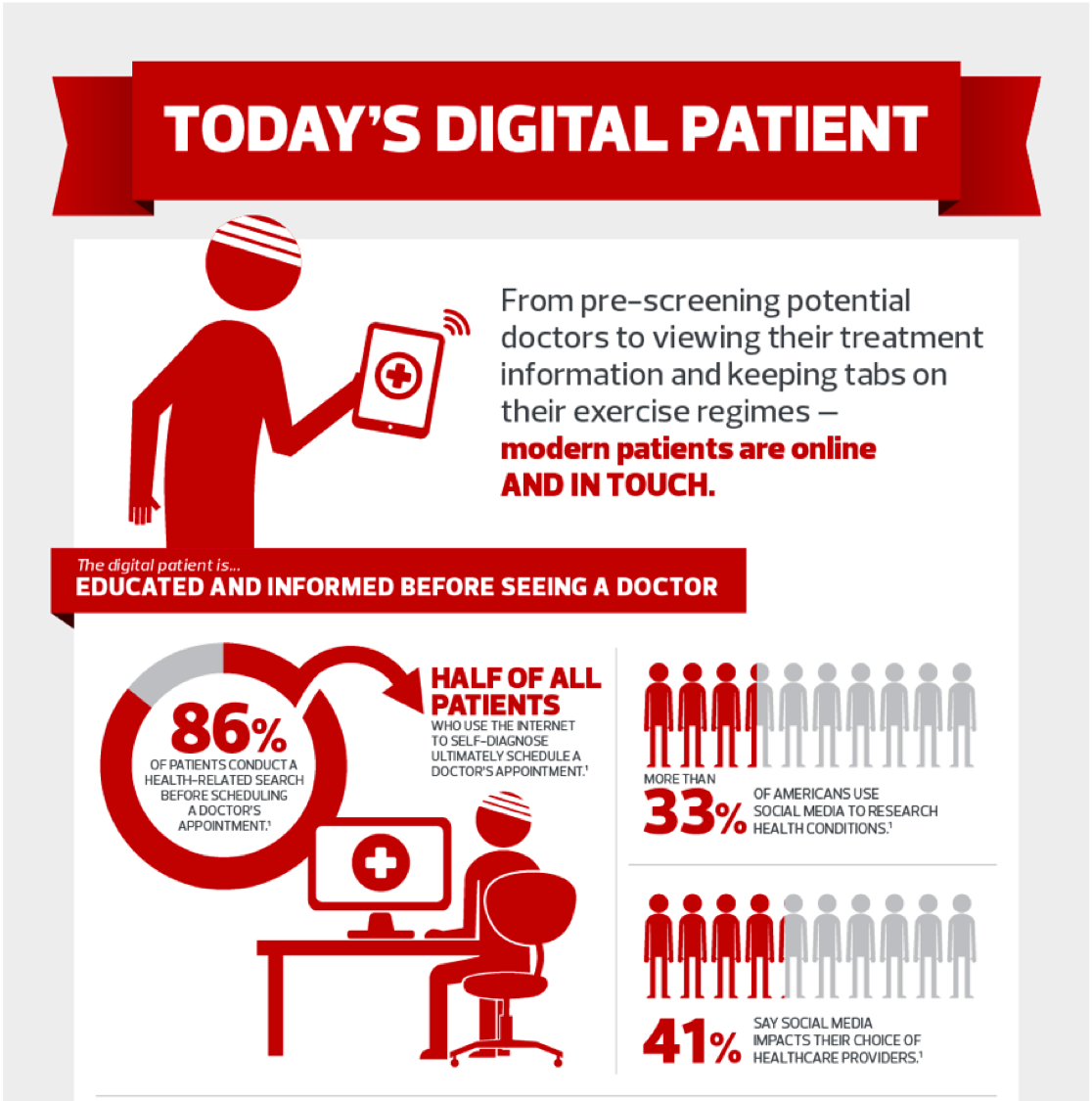
If we look at today’s world… Almost every person on the planet has some form of a mobile device. We demand immediate information, anywhere.. Including those related to health. So if we feel strange or feel ill we look to the web or the net for answers, immediate diagnosis in that case, and in most cases we get wrong information.


After visiting a medical practitioner,  Doctors would like to stay in touch to make sure our health issues are being addressed and most medical practitioners want to ensure that medications given are taken properly and are effectively.


In fact today there are more than 100,000 mhealth related applications available on public application stores and in the US alone there were 247 million people who have downloaded  an  mhealth app in 2013 alone.


However most mHealth app today are based on wearable and fitness devices


Mobile Health  is a very fast growing economy on its own and projected to be around 58B US$ by 2020 for applications alone. A small piece of the health industry which is projected to be around 6T US$ at that same time.


mHealth is such a hot topics these days that even Google and Apple have joined in...


Considering that wearables alone will be worth around 12B US$ by 2018


However in the future it will no longer be wearables that will drive mHealth, it will be the need for actual medical care.


And this is due to huge savings on the way medical care is provided to a growing population, a population that is demands real time and increasingly mobile.


Hence some countries already have taken advantage of this opportunity. Take the Medicon Valley as an example, it is being geared to the the next version of Silicon Valley in the medical field. The Öresunds region which encompasses Southern Sweden and Denmark will soon no longer be called Öresund even by locals...


but will be known as Medicon Valley.


In this region, today, you will find the largest concentration of life science companies and organizations... Most if not all are already having their own mHealth app...

  • 80 biotech companies
  • 20 pharma companies
  • 100 medtech companies
  • 7 science parks with a significant focus on life science
  • 6 incubators, of which 3 have a significant focus on life science
  • 80 contract research organizations and contract manufacturing organizations
  • 40,000 employees in the private life science sector
  • 12 universities, 5 of which supply life science related educations                 
  • 32 hospitals, of which 11 are university hospitals


So the question is do you want to join this massive wave and revolutionize health by  making it truly mobile…  and global? How do we help those who need medical care but can not afford it?

Friday, September 19, 2014

Manila Hotel - Hits and Misses

During my childhood in the Philippines,


Manila hotel is the premiere destination to have your guest to stay in, to have the most glamorous parties in town… Decades later bigger hotel brands with their impeccable 5 star services has come to the Philippines so its time to check back on how Manila Hotel is doing


The building itself needs renovations, from the outside it does not look very appealing to stay into, it is no longer the preferred accommodation for the jet set or the business traveler. Arriving into the hotel, even in a posh car the bell service is actually no service. Not even an offer to assist guests with their luggage. Security personnel were not courteous either in screening luggage that comes into the hotel… It seems they have sacrificed customer satisfaction for the sake of perceived security. The reception is no better with the staff snobbish and impolite and there seem to be a lot of distrust to their guests….

Inside the hotel, the decors brings you back to the time of the Spanish regime in Manila. Its like stepping into a time machine giving you the all the opulence during the time of Marcos and all luxury that comes with it. I feel nostalgic as I entered the room given to me, a flat sreen TV inside the bathroom brought me back to the reality of the modern age… Although the paintwork is relatively new, it can be improved to give the impression of a modern classic instead of antique. To my surprise the Spa is open 24 hours a day… a far cry from most hotels that closes in the evening. Sleeping comfort is superb.


Business services which is typically free in most moderns hotels are not free at Manila hotel, prating is 1.5 USD per page… that’s a lot of money for a piece of paper, well even more expensive than printing a dollar bill :-). Here Manila Hotel has a lot to learn, it has not discovered yet that high spenders are mostly business travelers (who dines in and prefers to stay and spend within the hotel premises to save time). Manila Hotel in itself now a days is reduced to delayed passenger sanctuary, not the kind of customers you wan in a luxury hotel.


Breakfast is great, it has not lost its old charm of providing spread from various regions of Asia and Europe. Services are good too, except when you are asked to sign a 25USD bill for breakfast. For all its charm Manila hotel has lost its title of luxury, it is no longer the place to stay… The bigger foreign hotel chains has done a much better job of providing excellent experiences to its customers, something that Manila Hotel needs to learn if it wants to stay on top of the Hotel business in the Philippines.


I won’t be staying in Manila  Hotel again unless its free or if I need to go to the Spa or the gym past midnight.

Wednesday, September 10, 2014

Making a difference through farming and community services

In the beginning of the year I had the opportunity to visit rural areas north of the Philippines, where I grew up as a kid. The place has changed a lot since last time I visited there 18 years ago. There were progress made, people are still happy but poverty is still abundant. Although most people survive with their basic needs through farming and foraging there are still a lot of people with no permanent jobs, no source of income. Most farms are tended manually, hard labour and no machines making farming ineffective and unproductive. Due to the lack of infrastructure there are a lot of hits and misses as well, some years are good, some years are bad with most farmers ending in heavy debts. Visiting the farms it dawned to me that we should be able to help the community, essentially give back to the community where I send some childhood years. Hence me and my brother hatched a brilliant plan of acquiring lands in the area, developing this lands and employing people. The ultimate goal is to be able to help over a thousand families in the area, that’s equivalent to over 5000 people, our way of giving back to the community and making a small difference on our own way in this very big wide world where we lived in.

Since I have my business to attend to we hatched the plan of having my parents involved. My brother will essentially manage the business, my parents will oversea local operations while I simply advise on business and strategic matters, essentially a very small portion of my non-working time to give back to the community. We are starting small helping 5 families to start with while keeping that ultimate goal in mind. How are we giving back to the community? Its essentially simple focusing on people, infrastructure and the environment.
  • Build infrastructure to make farming much easier. Dams, water ways, power distributions, access roads
  • Acquire struggling farms at a premium and employ the same farmers giving them a stable income on top of the premium paid for their farms.
  • Develop the farms to become productive and sustainable
  • Hire workers and pay them a much higher salary than what the local government pays their employees
  • Provide housing for free
  • Supplement their incomes with free food stuff
  • Provide scholarship to deserving students
  • Provide free health care and free medical outreach program by bringing competent doctors from Metro Manila during outreach programs
  • Organize festivals for the community every after harvest, recognizing their hard work and dedication.
  • Facilitate financial service, micro finance to start with
  • Create clean, green and sustainable farms without harming the environment
  • Replanting on deforested areas

This we do funded by our own pockets without any help from the government with the goal of being able to help a thousand families long term. Once we have proven success for this community services model we will expand, bringing in more external investments to the community from investors who share our principles, our ideals and our commitment to support and develop the community. If you are interested in participating to develop impoverish rural communities in the Philippines in your own small way please feel free to contact me.

Friday, September 5, 2014

Improving experiences for the most demanding customers


The summer has been hectic with customer  deployments, balancing work and personal life, kids and businesses. With all things happening here and there I neglected writing, even with all those extra time on long flights. Now finally on a flight between Kuala Lumpur and Manila and have time to write about demanding customers. Customers who demand for the best, they are everywhere, like you and me. There have been a few surprises in exceeding customer expectations and there are bad misses. Let’s take SAS as an example, on a  flight to Stockholm the stewardess started singing, entertaining the entire flight, it was short flight but then again, they exceeded expectations. On the flight back SAS lost my luggage, then promised to send it to my flat after it arrives on the next flight. The bag arrived at the airport but they were not able to deliver since they can’t find my flat and only got it 8 hours later. Now I wonder if SAS delivery spend 8 hours finding my flat in a small city, how lost can they be in running an airline business and much more lost in delivering good customer experience.

The most demanding customers today can be found having mobile phones, of which they demand excellent services in every way. From providing voice services where the expectations is zero dropped  calls, very fast data speed and excellent customer service. Every mobile operator in the world strives to provide the best quality of service to their customers, however not all of them succeeds. In my previous post I talked about several apps on the market today that allows a mobile phone user to test their services and share it on the net. The question in doing that is what benefit is it to the actual user? Does it give him/her a better service? Or do he/she use it to justify moving to another service provider. It is true that service quality is a big driver in churn, however is much more than a slow data in a particular area, its all about the overall experience from services provided to interaction with a service personnel.

Now imagine, instead  of calling your service provider to complain about bad services or bad experience, would you rather simply tap your phone and it takes care of the rest? Including getting updates about the bad service you experienced all the way to getting if fixed. In this way we can demand of better service, we can demand of faster response and faster resolution, we can demand of being in the know, we can demand of the correct fixes instead of  customer service agent simply selecting the top 10 answer on their list of issues.

If a service provider is able to meet our demands, what's next?


Thursday, September 4, 2014

Leaving Facebook - Never ever give your ID to FB!

CNN published an issue  in Facebook today... where FB users are most likely billed high on their mobile data due to autoplay settings in FB. Now I turned off autoplay on FB but then FB suddenly logged me out and starts to ask to upload my ID... Something I will never do in social media considering that they already know a of things about you, why would you give FB your ID.

Giving your ID to FB allows them to control everything about you,  from your permissions to bank account to government records and can be used by hackers to have access to everything about you and everything you own...

So if FB ask for your ID, you have been warned!

Saturday, July 5, 2014

Limiting frustration caused by mobile networks

When using our mobile devices, how many of us have become frustrated that the services provided are very slow, especially when using social media? Consider the horror of chatting to a friend or worse your impatient teenage child and your message are being delivered minutes later if not hours later. To avoid such frustrations applications that can tell you how good the services being provided would come in handy. Here comes  several apps that enable mobile phone users to determine whether services provided at a particular  location by a particular mobile service provider is good or bad. And with the option to share such results in social media a user can notify their friends what to expect, lowering the amount of frustrations being experienced. Is such an application useful for you?

Saturday, June 28, 2014

Is security policy an excuse for bad customer experiences?

During the CommunicAsia 2014 we hosted meetings in hospitality suites for VIP visitors at the Marina Bay Sands, one of the best hotels in Singapore. However the experience was not all great. The restaurants, yes they were very accommodating and even opened the kitchen for us for lunch (very late indeed). However security policy of going from one tower to another is a let down. To be able to cross the Marina Bay Sands famed infinity pool area you should be a hotel guest. Which we were, and had one VIP guest registered and all… Having said that after lunch the area security denied us to pass through the pool area due to security reasons, out registered VIP guest is not staying in the hotel… what a bummer. This is very sad for Marina Bay Sands known for accommodating their customers to the best possible way.


Reminds me the same excuse is being made by Air France, even in first class like the horror stories my well known friends told me…. They will never fly Air France again… As for Marina Bay Sands does it warrant we stop hiring suites in the hotel?

Compared to Mandarin Marina, where they went through all the lengths to ensure that our VIP guest is treated as VIP, I think Marina Bay Sands still have a lot to learn in providing excellent customer service to its staff. As for me personally I won’t be staying at Marina Bay Sands anytime soon…. BTW Mandarin Marina was awarded best hotel in Singapore last year.


Wednesday, May 21, 2014

The Future of Delivering Unparalleled Customer Service for Mobile Networks

I was in meetings  in one of the top 5 largest telecom markets globally in the past days and witnessed the birth of a new breed in delivering excellent customer service. Just imagine your service provider calling you of a bad experience you encounter before you can complain…. Imagine a world where your experience in using a mobile network is constantly being improved, a world where delivery of data services is so seamless you will never ever have to call customer services to complain. Imagine a world where your mobile network service provider cares more for you than they do on how much money you spend on their network. Imagine the future of connectivity so reliable that you will never ever be out of touch again…

Fortunately for us this future has arrived, soon you will never ever have to complain again since you are confident that every bad experiences you encounter while using mobile internet or your mobile phone are being constantly improved. You will never have to worry again that mobile network operators are tracking your usage and behaviors through hidden probes in the network. You will never have to worry again that every transaction you did with your mobile device is recorded somewhere in the network and are being accessed by someone whom intentions are not known to you. Soon you can use your mobile device with complete ease of mind and complete confidence that the services you use will be seamless and of excellent  quality.

How is this all possible? Not by using hidden recordings or probes that cost a fortune to mobile network operators but by a simply enabling mobile phones to automatically flag bad experiences  the user has encountered without the user having to do anything… This automated bad experience flagging then becomes an input to mobile services provider automated optimization process. This will eliminate the possibility of big brother watching everything since the device will simply send bad experiences and remove the need to monitor every transaction the device  or the user has made.

Friday, May 9, 2014

Losing Michelin star due to bad experiences

I was in a meeting in Copenhagen at Kiin Kiin, known for being the first Thai Restaurant in Europe with a Michelin star. Sure the food was great, absolutely delicious and in that respect it deserves its Michelin star. However is Michelin star now simply limited on how good the food is? And does Michelin star still matters?

Well Michelin star still commands respect, specially in setting higher prices, however there are lots of good restaurants with great food that has no Michelin star such as Sillen & Makrilen in Helsingborg. But what if service is so bad, does a restaurant deserve a Michelin star?

Back to Kiin Kiin, I have been there serveral times and the last two times on meetings the service was atrocious, really, really bad. First there was no fresh young coconut juice, a signature on any good Thai restaurant.. and even no apologies for not carrying it. Secondly the waiters are just so bad in explaining what's in the food. And last time I was there they gave a defective chair that the chair collapse before I can even sit on it.. to my horror and stares of everyone in the restaurant... How can you give your guest a broken chair? They also try to cram so many people in the restaurant that the experience of having a nice dinner is no longer there..

Since Kiin Kiin provides a very bad service and very bad experience that the food starts to taste bad, should they not lose their Michelin star?

Thursday, March 13, 2014

Preventing planes from going missing ever again

The search for the missing Malaysian airlines plane is still ongoing several days after the plane disappeared from radar view. Could such a difficulty be avoided in the future? Various aviation experts have their own theories as to what has happened to the plane and what can be done to prevent such an anomaly from occurring again. Now the question is "can the issue of not being able to locate a plane be avoided in the future by using commercially available technologies today?". The answer is YES, with mobile devices.

As you know most Smart phones or devices are GPS enabled and such GPS coordinate or location can be made available by the device, for example to Google if it has Google service installed or to any other application that ask for location. If all airlines follow the example of Qatar Air on their 787 fleet where mobile services and WiFi services are available then it would have been easy to find the last known location of the plane even if it went out of radar range. But How?

Let's follow the thought of an individual who would board a plane with mobile service or WiFi service enabled. The person will then turn on his mobile device  on board, connect to the internet, use social media telling his friends how cool it is to be able to do that while in  flight. He might even send and SMS  or make phone call. All those activities can be location tagged, either stored on the phone or sent to a server somewhere depending on which application runs on the phone…

If such device for example has a customer experience agent such as Geoptima then the last known location of that device will always be available. Of course with just one device active or connected it is still an inaccurate location, but imagine what if all passengers use their devices… we can then look into history which of those device has last sent a location and where, in that case it would have been possible to know where the missing plane is and not spend millions of dollars and countless man hours in searching for its whereabouts.

If only we can contribute on our own little way to the world then at least we can help people and save tax payer's money…. To do that we will have to convince mobile operators first on its value but perhaps it is possible to provide such capabilities directly to consumers for free as part of our Corporate Social Responsibility program….

I am in Egypt, and I was hoping that the country has changed after several changes in its leadership. But sadly it has gotten worse. On my way to check-in for my flight I was met by a greeter asking to help... so I played along, I noticed he knew all the security guys in the airport, so every security check point he asked me to give money to the security guy (well I think he pocketed most himself). So I passed 2 security checks without being checked, not even going through the Xray machines... This is so rampant that anyone can smuggle anything outside the country without being checked for just 10 US$... Just imagine you can make a plane disappear for only 10$....


Sunday, March 2, 2014

Customer Experience Improvement observations at MWC and beyond

During MWC Customer Experience talk is all about implementation in various ways. Last year it was all about exploring the concept, now most vendors have  incorporated CEM in their portfolio in one way or another. Not only vendors and operators were talking about customer experience improvement programs but even regulators are moving from traditional technical metrics to customer experiences as the main metric to determine operator compliance to license conditions. This is all good and well, the question is how far are this programs going? Are there any success? Are they really making a difference to the bottom line?

I am on my way to Jakarta, flying via Qatar. I am always amazed how good services are with Qatar Air. Well this week have receive several upgrades from a normal room to a splendid suite from a normal airline seat to my own private cabin to the point that it get me thinking of a certain high flying club, but like in all personal things I wanted my better half for that.


Being in the Middle East the CEM award for Telcos come to mind. IQPC who is organizing the CEM Summit in Dubai should now have an idea on who the nominees are. If you ask me for nominees I would say best airline will be a toss up between Emirates and Qatar air…. Only problem is that the award is for telco… on which I can rate Qatar air low for having an inaccessible WiFi on board. Not only that is paid but you can't actually use it since instructions on how to connect is wrong or do not work. With this I admire Norwegian on the simplicity on how their WiFi on board service works.

In Dubai at the end of this month, Gurol Kurt of TeliaSonera will be talking about delivering promises like TeliaSonera. Now I can almost already confirm that TeliaSonera, at least in Sweden do not deliver that promise very well. Let me take my case while in Singapore Telia slapped me a very huge bill for data roaming when I receive an SMS saying I should pay a fixed fee per day instead they were insisting to bill me 100 SEK per KB of data, which by the way if anyone is aware of the European directive on roaming is against the law. On another instance I used my 4G services to watched the olympic games, then Telia told me I exceeded my data limit and need to pay additional fee to keep the fast data access. Well I signed up paying for the most expensive service, but then again I got the slowest possible data service. So much for promises perhaps Gurol Kurt can explain how TeliaSonera is delivering its promises. I will be all ears.

Talking about promises, During the MWC Vodafone launch Vodafone xone with the slogan "Delivering the  promise". I would say its about time and looking forward to Fay Arjomandi and Michael Callas  delivering on that promise. Vodafone Xone is supposedly a social discovery mechanism, making things easier for you by discovering what you want and making those choices available… Much like the way google analytics work but hopefully no advertisements like the Music Genome Project. I like to simple services and stand by KISS.. More about that on my next post. For now I will have to figure how to get Radhika Sasidharan to provide me an access to CEM MEA telecom summit.